Serving up veggies in all of our products!

Showing posts with label healthy kids food. Show all posts

Friday, January 11, 2013

Fort Frydays


Fort Frydays is back for 2013!  As you know,  Peas of Mind’s Veggie Wedgies are now in military commissaries, which means we get the honor of feeding the brave men and women who serve our country and the families who love them.  Fort Frydays is a celebration of the moms and dads (or Home Town Hero’s as we like to call them) who take care of the household while their spouse is/was away. 

This week we’re celebrating military wife and mom, Chantal Shelstad. When Chantel's not busy with her daughter and husband, she writes for her blog Scattered Seashells about life as a military mom helping her family live a healthy lifestyle (her life just got a little easier because now she can get Peas of Mind products at her commissary)! 


More from Chantel, this week's hometown hero:

What branch of the military is your spouse in?
“My husband is in the Army. He is training to be a helicopter pilot.”

How long have you been a military wife?
“We've been married since June 2008, and he's been in the Army since then too! So it'll be five years come this summer.”

Do you have kids? If so, what are their names and ages?
“We have one daughter, Penny, who just turned one in December.”

Do you or have you lived on base? 
“We live on base here at Fort Rucker. Before we lived here, we were stationed in Hawaii, and we lived on base there too.”

What is the best thing about base life?
“We love being close to his work so he can come home between breaks.  There are lots of perks of living on base - proximity to the commissary and PX, close to other families, good housing. I especially love being on post here because I'm close to friends, because my husband is gone a lot for training in flight school.”

What is your favorite food to prepare for your family?
“We have tons! But I like a good meatloaf with roasted broccoli and sweet potato fries on the side. I’m so excited to try Peas of Mind Carrot fries, they seem super healthy and easy to make.”

You are on a deserted island and can only bring one thing...Go!
“Does my husband count as a thing? Seriously, he would get us out of anything. I'm sure that's putting a lot of faith in him but I trust him beyond words. I know he would work to get us off that island.  Well, unless we liked it so much, and then he'd work to make us a great house!”

Is Military life what you thought it would be?
“That and more! I love the relationships I have with others who understand exactly what I'm going through. I love the opportunities we have to travel. I love the activities they organize. I love the sense of community. I love being an Army wife!”

Thursday, July 29, 2010

Orange-Honey Frozen Yogurt


With all the great feedback we've gotten on our hand-shaken ice cream reci-pea, we had to do a fro-yo spin-off!

Here's a wholesome, homemade version of soft-serve for the kids to enjoy this summer, and you won't need an ice cream machine to make it! Using ice, salt and some elbow grease (with your help, of course!), kids can make their own healthy frozen treats this summer. Makes 2-3 servings. Serve with any kind of fresh fruit.

Orange-Honey Fro Yo

  • 1 cup plain yogurt,
    Greek yogurt preferred (non-fat, low fat, or full fat)
  • 2 TBL sugar
  • 1 TBL honey
  • 1/8 tsp vanilla
  • 1/8 tsp orange zest
  • 1 TBL orange juice
  • 2 ice-trays of ice
  • 1/3 cup salt

In a blender or food processor, combine the yogurt, sugar, honey, vanilla, orange zest and orange juice. Blend until smooth.

Place 1 cup of the yogurt mixture in a 1 quart zip-top bag, squeeze most of the air out and seal the bag. Add about 2 trays of ice cubes to a 1 gallon zip-top bag (about 1/3 full) then add 6 tablespoons of salt. Place the small bag of yogurt inside the large bag of salt and ice, squeeze most of the air out and zip the large bag closed.

Wrap in a kitchen towel and hand to a child to shake and squish for about 7 minutes until the yogurt mixture firms up. The more you shake, the smoother the finished frozen yogurt will be. Retrieve the small bag of now frozen yogurt, snip off a corner of the bag, and squeeze out your fro-yo! Top with any fresh fruit.

Thursday, June 3, 2010

Fruit Remix on the Original Candy Necklace

We love all things edible here at Peas HQ! This is a fun crafty project you can do with your kids on a rainy afternoon or whenever their friends come over. Here is our healthy version of those edible Sweet Tart necklaces & bracelets. Instead of those sugar rounds why not string snacks you would rather your kids eat?!

Supplies:
* elastic craft string
* plastic craft needle
* stringable foods:
  • cheerios
  • dried fruits like
    • mangoes, cut into 1/2 inch peices
    • apples, cut into 1/2 inch pieces
    • raisins
    • cherries
  • licorice, cut into 1/2 inch pieces
  • mini marshmallows
  • popcorn

For the younger kids you may want to make bracelets instead of necklaces for safety reasons.
Start with about an 8 inch length of elastic craft string for a bracelet and 14 inches for a necklace.

Thread one item on the string and double-knot the string to it.

Let your children continue threading the ingredients you have gathered onto the string.

When they've filled it, knot the ends together. Now they have a necklace to wear and a snack to nibble!


For more kids' food crafts, check out this site.

Friday, May 28, 2010

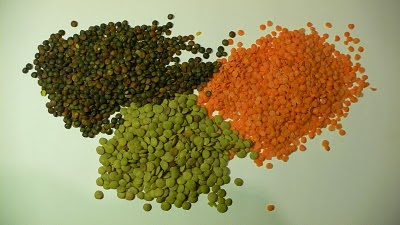
What we are into right now: Lentils!

Lentils are similar to beans in nutritional content and cooking method required (boiling). However, lentils cook much faster than dried beans (in 10-25 minutes compared to an hour or longer) and are a fantastic vegetarian source of protein, B vitamins and iron, calcium and more. With 26% of their calories coming from protein, lentils are second only to the soybean in protein content among legumes and pulses. With the info, tips, and recipes below, we hope this entry will encourage you to incorporate lentils into your family's diet.

Lentils are used throughout India, the Mediterranean regions and the Middle East. They are frequently combined with rice, which has a similar cooking time and creates the same 'complete' protein in the diet as classic combos like rice and beans or a PB & J.


Apart from a high level of protein, lentils also contain dietary fiber, folate, vitamin B1, and minerals. Additionally, lentils supply soluble fiber which helps moderate cholesterol and blood sugar levels.


There are many varieties of lentils from all over the world. Here are our three favorites that we always have in the pantry:

  • Red/Pink lentils (aka. masoor dal) [pictured right]
    • cook time: 10-12 minutes.
    • texture when cooked: loose their shape, very soft
    • use in: pureed soups and saucy, curry-like Indian dishes
    • Example: Dal (lentils) with Coconut Milk over brown jasmine rice

  • Brown lentils (khaki colored) [pictured front]
    • cook time: 15 minutes.
    • texture when cooked: hold their shape but creamy inside.
    • use in: soups, stews and salads.
    • Example: Vegan 'Sloppy Joe's'

  • French Green (dark speckled blue-green) [pictured left]
    • cook time: about 20 minutes.
    • texture when cooked: maintain their shape and a firmer texture
    • use in: salads (warm or cold).
    • Example: Lentil Salad with Roasted Bell Peppers and Lime-Cumin Vinaigrette (from Vegetarian Cooking for Everyone by Deborah Madison. This is one of our favorite cookbooks. It contains another fabulous recipe with lentils, pasta and rice. Sounds strange but tastes awesome!)

*Note*: Red (or pink) lentils contain less than half the fiber of green lentils (11% rather than 31%), making red lentils a great one to start with when introducing them to a small child or anyone who is not accustomed to fiberous foods.

Preparation
  • For salads, drain lentils when they are cooked through but still firm.
  • For soups or purees, cook lentils until they are soft.
  • Lentils can be cooked in the microwave, but it takes almost as long as on the stovetop.
  • Try them sprouted!
Serving Suggestions
  • in soups
  • casseroles
  • with vegetables
  • with grains like pasta or rice
  • in a salad, warm or cold
  • in a chili-like legume stew, served on a roll like a sloppy joe
  • formed into patties for veggie burgers

Friday, April 2, 2010

Fortify Your Child's Diet with Heart-Healthy Wheat Germ

Looking for an easy way to add vitamins, minerals, protein and heart-healthy fats to you child's diet and your own? Look no further; wheat germ is the hot ticket.


Although the germ makes up only 2.5% of whole grain wheat, the germ contains a great majority of the vitamins and nutrients present in wheat. Whole wheat flour retains the germ (and all of its excellent nutritional value) while white flour loses its germ in the refinement process. Many of the benefits that whole wheat offers over refined wheat comes from wheat germ. Refined white flour must be 'enriched' legally in an attempt to replace what is lost when wheat germ is removed (like B vitamins and iron), but it is not a complete replacement. The following lists the numerous benefits that wheat germ offers:


Wheat germ is a good source of:


B Vitamins: Folate, Niacin, Thiamin & Vitamin B6 (for metabolic health)
Calcium (for healthy bones & teeth, muscles and blood clotting)
Fiber (for digestive health and prevention of heart disease, cancer and diabetes)

Iron (for healthy muscles and blood function)
Magnesium (for healthy nerves, bones, muscles and heart)
Manganese (for energy production)
Omega-3 Fatty Acids (for healthy cholesterol, brain function, and satiety)
Phosphorous (for energy production)

Potassium (for healthy nerves, muscles, heart and kidneys)
Protein (for healthy muscles and organs)
Selenium (for a healthy immune system and the prevention of cancer)
Vitamin E (for prevention of heart disease and cancer and for healthy skin)
Zinc (for a healthy immune system and cell growth and repair)


Add to any breakfast:

Try sprinkling a tablespoon of wheat germ over breakfast cereal or oatmeal, or stirring a couple tablespoons into a batch of any pancake or waffle batter. Growing up, my mom used to replace 1/3-1/2 cup of flour with wheat germ in her homemade waffle recipe which lent a delicious nutty flavor and crunchy texture that the whole family enjoyed. Now, whenever I bake, I consider making a similar replacement in recipes like banana bread or muffins of any kind.

Store in the fridge:

All those healthy unsaturated fats in wheat germ are delicate and, unfortunately, go rancid (spoil) quickly, especially when exposed to warm temperatures and light, so be sure to store your wheat germ in the fridge or freezer.


Share your favorite ways / success stories of incorporating wheat germ into your household's meals with us!


Sources:

* On Food and Cooking - Harold McGee

* The Wellness Encyclopedia of Food and Nutrition - UC Berkeley
* http://www.wheatgermbenefits.com

Thursday, March 4, 2010

Apple Seeds & Green Potatoes

What they have in common...

When a friend of mine attempted to eat an apple core on a hike a few weekends ago, I stopped him. "Don't you know that apple seeds contain cyanide?" I exclaimed. Though I'm not sure he believed me, the possibility alone was enough to discourage him. Had we had any reception, I'm sure 20 seconds on an iPhone would've settled it right then. Ah, the great outdoors!

It was then that I realized that there must be other seemingly innocuous foods in our diet that could, perhaps under odd circumstances, be potentially harmful to us. This entry is not intended to spook or discourage anyone from eating the following foods. Instead, the hope is to offer a Botany-of-Desire-like perspective to provide an informative look at a few common foods.

Why Plants Make Toxins
Many species of plants produce chemicals that discourage animals from eating them. Although we've domesticated varieties of fruits and vegetables to be edible and tasty, some still contain toxins as a natural form of defense. Below are a few examples:

Cyanide in Apples, Pears, and Citrus Fruits
The seeds of apples, pears and citrus fruits contain cyanide. However, swallowing the seeds whole isn't terribly risky; these seeds have a durable outer coating designed to protect the seed while it passes through an animal's digestive system. The seeds could be dangerous if ingested in large amounts especially when the protective coating is damaged (by chewing for example).
  • Avoid by: removing the seeds of apples, pears and citrus fruits, particularly before feeding them through a juice extractor (a juicer that obliterates fruit and vegetables). Also, avoid chewing these seeds.

Cyanide in Yuca
Yuca (also known as Cassava, Manioc or Tapioca) is a starchy root that grows in the tropics. The "sweet" varieties sold in the produce section have been bred to contain far less cyanide than the potentially toxic "bitter" variety, but still contain significant amounts concentrated near the skin.
  • Avoid by: peeling and then soaking or boiling yuca(cassava) before baking or frying. Luckily, cooking yuca in water makes it healthier but also much tastier.

Alkaloids in Potatoes
Alkaloids are a family of compounds that often taste bitter and have an effect on animals. Alkaloids are produced by plants to affect the consciousness of the animals that eat them, effectively distracting the animal and sparing the plant. Though most alkaloids are toxic at high doses, a few common alkaloids that (some) humans utilize include caffeine, morphine, nicotine, theobromine (responsible for increased heartbeat when eating chocolate) and capsaicin (responsible for the spicy burn of hot chili peppers).

Potatoes contain an alkaloid called Solanine that is both bitter and toxic. All potatoes contain small amounts of Solanine, but potatoes exposed to light can have three times the normal amount. Because the potato turns green (for a completely different reason) when exposed to light, green potatoes should be peeled aggressively or, better yet, thrown out.
  • Avoid by: storing potatoes in the dark and avoiding potatoes that have turned green. Also, note that the leafy stalks of the potato and its relatives, including the tomato, chili pepper and eggplant, contain even greater amounts of alkaloids and should certainly be avoided, though they supposedly taste terrible anyway.

Oxalic Acid in Rhubarb (and, to a Lesser Extent, Spinach)

Oxalic acid is a waste product of plant metabolism that is found notably in spinach, beet greens and rhubarb. Oxalic acid locks onto minerals like calcium and iron, preventing your body from absorbing them.

While the amount of Oxalic acid in spinach and the red portion of rhubarb is safe to eat, the green leaves of rhubarb contain much higher levels making them unsafe.
  • Avoid by: never eating the green leafy tops of rhubarb stalks. Cooking spinach will destroy some of its oxalic acid, rendering the calcium and iron more available for absorption by the body.

Sources:
* On Food and Cooking - Harold McGee
* The Wellness Encyclopedia of Food and Nutrition - UC Berkeley
* http://www.snopes.com/food/warnings/apples.asp

Wednesday, November 11, 2009

Sugar 9 Ways!

We, at Peas of Mind, like to avoid adding sugar whenever possible, but there are some situations where added sweetness is necessary. For example, let's say your child has a few friends over and you decide to make lemonade. Might you consider using a 'raw' type cane sugar or maybe even agave syrup to stand in for the good ole' white standard?

Refined white sugar is 99.9% pure sucrose, which means it is almost entirely absent of any vitamins or minerals. When considering alternative sweetners, natural food stores offer such an overwhelming selection that its tough to know what to choose. Below is a chart we created to help differentiate among several natural sweetners:


Note the sweetners that are "sweeter" than white sugar (honey and agave). These naturally contain fructose which, molecule for molecule, tastes sweeter than the sucrose in table sugar. That means that you can use a smaller amount of honey or agave to acheive the same sweet taste as sugar!

Sources:
On Food and Cooking - Harold McGee
http://en.wikipedia.org/wiki/Agave_nectar

Thursday, October 29, 2009

Tales of Homemade Pizza

We were recently invited to an extraordinary evening of pizza-making. Hosted by Cooking for Geeks, we were in pursuit of ways to achieve the crispiest pizza crust at home.

Here at Peas, we often make pizza from scratch at home. Making your own pizza is a great way to get kids into the kitchen where they can experiment and create a combination all their own. It makes for a darn fun dinner party as well. Making pizza together is a joyous experience, and its incredibly economical to boot.

Mmmmmm... heirloom tomato.


Producing a crackly crust can be tough to achieve at home, even when using a pizza stone in an oven at the highest temperature setting.

On this particular evening, our insanely curious friend hacked the lock on his home oven so he could effectively bake with the oven in cleaning mode. Yikes!!! At a temperatures nearing 900 degrees at times, one pizza cooked in a mere 45 seconds! Do not try this at home!!!


That gadget in hand is an infrared thermometer. Yes, it says 845 degrees F!


Now that's crrrrispy!


Here's a safer way to imitate this crazy hack.

The "Cast Iron Skillet + Broiler" Method:

Crank your oven to its hottest (approved) setting with a rack in the central position. Heat a cast iron skillet on the stove top, giving it time to get super hot.

2 minutes before you bake, switch the oven to the broiler setting.

When you're pizza is topped and ready to bake, invert the cast iron skillet and slide your raw pizza onto the scorching hot base of the skillet. Carefully (!) transfer the skillet to the oven (now on broil). Keep an eye on that pizza because it will cook faster than imaginable!


What's your spin on homemade pizza? Tips to share?

Thanks for hosting, Jeff!!!

Friday, October 23, 2009

The Story Behind the Black Bean Polenta Puffet


Being that her dad was raised in Alabama, its not surprising that the owner of Peas of Mind grew up eating grits.

Inspired by this childhood favorite, the Black Bean Polenta Puffet was originally called the Black Bean & Grits Puffet. When nobody in California knew what grits were, polenta was the perfect substitution. But wait, what's the difference between polenta and grits?

Two main differences:

1. The corn ground to make polenta is finer than that of grits, a difference that affects the final texture.
2. The corn used to make white grits is soaked in lye to remove the bran. The resulting corn is called hominy, which is also used to make masa harina (used to make tortillas.)

* Image from: http://www.food411.com
* http://www.grits.com

Tuesday, September 22, 2009

Are All Oats Created Equal?

Here at Peas of Mind, we often toast our morning oats (eating them dry like European muesli) instead of making oatmeal, but might this change in preparation impact the nutritional value? What about the availability of nutrients, minerals and fiber? The effectiveness of lowering cholesterol, extending satiety and minimizing rapid changes in blood sugar levels... Are we still cashing in on all these fantastic health benefits?

How does one choose which type of oats (instant, quick, rolled, steel-cut) to consume and which cooking method to use to prepare them?


Below is a summary of our findings:


Ultimately, instant, quick and rolled oats are all processed in the same way; the only difference is their thickness, which impacts the cooking time and resulting texture.

"Dry or cooked, oats provide protein, some B vitamins, and other nutrients, and they are rich in fiber - notably beta glucan, a soluble fiber that lowers cholesterol and helps control blood sugar." (UC Berkeley Wellness Letter, Volume 25, Issue 10, July 2009.)

Lastly, we evaluate steel-cut oats. Their extended cooking time presents a significant disadvantage in comparison to all other the types, but they offer 1 significantly unique advantage: SUPERIOR TEXTURE! Steel cut oats are fantastically chewy and therefore far more pleasant to eat than the others. They also have the lowest Glycemic Index (a measure of a food's effect on blood sugar levels, the lower the number, the better the food) of 42, an admittedly small reduction from that of cooked rolled oats (50).

One of us here at POM simply adores the texture of the steel-cut, so she makes a tremendous batch on Sundays to last her household the upcoming week. Cooked and stored in the fridge, even steel-cut oats can be 'instant' on a weekday morning.

How do you like to make your oats?

Wednesday, September 9, 2009

Here at Peas, we're excited to take our blog in a new direction.

We're going to use this platform to provide tips and tidbits about cooking, kids & nutrition.

Our first tidbit is:

Snack for a healthy smile!

We know that dairy products are a great source of calcium, but turns out that cheddar-like cheeses have additional benefits to aid in the development and maintenance of teeth, particularly when eaten at the end of a meal.

First off, the minerals calcium and phosphorous present in cheese buffer the weakening effects that strongly acidic foods have on teeth.

Chewing on cheeses like cheddar activate the salivary glands to produce more saliva which helps remove residual pieces of food in the mouth. This is particularly effective after a child eats sweets: the cheese loosens and sweeps away sticky bits of candy and thereby helps prevent decay.

Eating cheeses that are semi-firm (like like cheddar, swiss, mozzarella and monterey jack) are particularly effective in this regard. These cheeses are made from very smooth curds that act similarly to a squeegie on a glass window, removing all of the grime, leaving teeth squeaky clean!

So at the end of a meal, consider serving a small cube of cheese to your little one, and enjoying a nibble for yourself.

Friday, May 15, 2009

Fava Fundip


Fava Beans are and excellent source of fiber and folate. Folate is necessary for the production and health of new cells and is needed to make DNA and RNA. Kids will love to help you shell the fava beans (at least for a little while ;) )

Fava Fundip:

  • 1 lb unshelled fava beans (this equates to 1 cup of shelled beans)
  • 3 tbl veggie stock
  • 1 1/2 tsp lemon juice
  • 1 tsp chives, chopped fine
  • salt and pepper to taste

Preparing your fava beans:
Fresh favas need to be husked. Shell the bean by pulling on the stem of the pod and "unzip" them on both sides. This will remove the outer shell and expose the bean. The beans have a waxy coating that needs to be removed. Remove by dropping beans into boiling water for 1 minute, then quickly plunging into ice water to stop the cooking process. Now remove the waxy outer coating.

Combine all ingredients in a food processor and blend until smooth.

CAUTION: Do not eat raw fava beans. The risk of eating raw fava beans is small, but some have a reaction.

We're now in Royal Oak Michigan at HOLIDAY MARKET!!

Wednesday, May 6, 2009

Pizza Sandwiches!

We've combined America's favorites!

This bread smells just like pizza! It's super easy, low in fat, and makes for a great substitute when the kids want pizza for the 3rd night in a row. It slices up great and is perfect as sandwich bread. Skip the mayo and try our Spinny Tomato Sauce; it's full of Vitamins K and A for strong bones, smart brains, and healthy immune systems!

Pizza Bread:

  • 3/4 cup shredded cheese (cheddar or mozzarella)
  • 2 cups all-purpose flour
  • 2 tsp baking soda
  • 2 eggs
  • 1 cup of your favorite pizza sauce (smooth not chuncky)
  • 2 Tbl olive oil
  • 1 large-sized garlic close, chopped
  • 1 tsp fried basil
  • 1/2 tsp dried oregano

Preheat over to 375F. In a large bowl combine the cheese, flour, baking powder and baking soda; set aside. In a medium bowl lightly beat the eggs then add pizza sauce, olive oil, garlic, basil, oregano and mix together. Add the sauce mixture to the dry ingredients. Stir only until the dry ingedients are moist. Generously grease a bread pan and pour batter into pan. Bake for 35-40 minutes or until a wooden toothpick inserted in the center comes out clean. When finished, turn onto cooling rack.

Spinny Tomato Sauce:

  • 1 cup of frozen spinach (or for added protein, grind up 1 Eat Your Greens Puffet instead)
  • 1 cup chopped fresh tomatoes
  • 3 Tbl organic ketchup
  • 1/2 tsp salt

Puree all the ingredients using a food processor or blender. When bread is cool; slice bread and spread Spinny Tomato Sauce instead of mayo. Add lettuce, tomato, cheese, and veggie pepperoni. Cut in half, and your kids will love your new Pizza Sandwich creation!

Monday, May 4, 2009

Cinco de Mayo with the Kids!

Mild Salsa Cha Cha:

  • 1 small 14.5oz can of diced tomatoes
  • 1/4 cup red pepper, small dice (about 1/2 of a small red pepper)
  • 1/4 cup red onion, small dice
  • 2 tbl ketchup
  • 2 tbl freshly squeezed lime juice (about 1 small lime)
  • 1/4 tsp salt
  • 1/8 tsp pepper

  • Optional Additions:
  • 1 tbl fresh cilantro or parsley, chopped
  • 1 tbl mascarpone cheese

Use your hand or a food processor to crush diced tomatoes into smaller pieces. Combine all ingredients, mix well, and serve with Peas of Mind, Black Bean Polenta Puffets...Celebrate!